
Hiring at scale requires more than simply posting jobs online and waiting for applications to arrive. By integrating job boards directly into an applicant tracking system, organizations can attract candidates widely while managing the entire hiring process in a structured and efficient way.
Summary
- Centralized job distribution: An ATS allows recruiters to create a job posting once and distribute it across multiple job boards, ensuring consistent messaging and reducing manual administrative work.
- Unified candidate management: Applications from all job boards flow into a single system, making it easier for recruiters and hiring managers to review, track, and collaborate on candidates.
- Efficient candidate screening: Built in screening tools help filter applicants and organize candidate evaluations so hiring teams can focus on the most qualified candidates.
- Scalable hiring processes: By combining the reach of job boards with the structure of an ATS, organizations can build a recruiting system that supports high volume hiring and long term growth.
Hiring at scale requires a different level of organization than hiring for a small team. As organizations grow, recruiting becomes more complex because more departments, hiring managers, and open roles must be coordinated at the same time. Without the right tools in place, even well structured recruiting teams can struggle to keep candidate pipelines organized.
Job boards continue to play an important role in helping employers connect with potential candidates. Platforms like Indeed, Glassdoor, and industry specific job boards attract millions of job seekers who are actively searching for new opportunities. These platforms help organizations generate applicant traffic and increase awareness of open roles.
However, attracting candidates is only the first step in the hiring process. Once applications start arriving, recruiting teams must organize candidate information, evaluate qualifications, and coordinate feedback across multiple stakeholders. This is where an applicant tracking system becomes essential.
An ATS acts as the operational center of modern recruiting. It connects job boards with internal hiring workflows so organizations can attract candidates and manage them in a single platform. Rather than replacing job boards, an ATS helps organizations use them more effectively while keeping the hiring process structured and efficient.
An ATS supports hiring teams by helping them manage the entire recruiting lifecycle. It allows organizations to handle high volumes of applications while maintaining consistency across departments and locations. For companies experiencing growth or managing enterprise level hiring demands, this level of organization becomes critical.
Key capabilities an ATS provides for hiring at scale include:
- Centralized job posting and distribution
- Consolidated candidate management
- Structured hiring workflows
- Collaboration tools for recruiters and hiring managers
- Reporting and analytics on hiring performance
These capabilities transform recruiting from a collection of disconnected tasks into a coordinated and scalable system. Job boards help attract candidates, while the ATS ensures those candidates are managed efficiently.
Centralized Job Posting Across Multiple Job Boards
Strong job descriptions are the starting point of effective recruiting. A well written job posting communicates expectations clearly and helps candidates determine whether the role is a good match for their experience. When organizations hire across multiple departments or geographic locations, maintaining consistency in these postings becomes increasingly important.
Recruiters often rely on multiple job boards to reach a broad audience of candidates. General job boards attract large pools of applicants, while specialized boards help connect employers with professionals in specific industries. Posting on multiple platforms expands reach and increases the likelihood of finding qualified candidates.
Without an ATS, this process can become time consuming. Recruiters may need to log into several job board accounts and manually publish the same job description on each platform. Over time, this repetition creates unnecessary administrative work and introduces the risk of inconsistencies between postings.
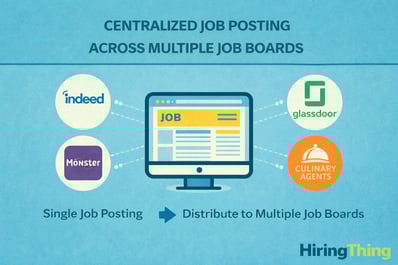
An ATS simplifies job distribution by allowing recruiters to create the posting once and publish it across multiple job boards simultaneously. Instead of managing each job board separately, the recruiter manages distribution directly through the ATS. This creates a streamlined workflow that saves time while ensuring consistency.

Centralized job posting also allows recruiting teams to respond quickly when updates are needed. If responsibilities change or new requirements are added, recruiters can modify the posting in the ATS. Those updates can then be reflected across connected job boards without requiring additional manual edits.
Benefits of centralized job posting through an ATS include:
- Publishing one job description across multiple job boards
- Maintaining consistent messaging across all listings
- Reducing repetitive manual work for recruiting teams
- Updating job postings quickly across all platforms
- Tracking which job boards generate the most candidates
This approach allows organizations to expand their recruiting reach while maintaining control over how roles are presented. Recruiters spend less time performing repetitive administrative tasks and more time engaging with candidates.
For organizations managing dozens or hundreds of open roles, this efficiency becomes extremely valuable. Centralized job distribution ensures that every posting remains consistent and visible across the hiring ecosystem.
Collect Applications from Every Job Board in One Place
 Once jobs are posted across multiple job boards, applications often begin arriving quickly. Candidates may apply through large job platforms, niche industry boards, referral links, or company career pages. Each source can generate its own stream of applicants.
For growing organizations, managing applications across several platforms without a centralized system can quickly become overwhelming. Recruiters may find themselves downloading resumes from multiple websites, organizing documents into folders, and forwarding candidate information through email. Over time, this approach leads to fragmented candidate data and reduced visibility across the hiring process.
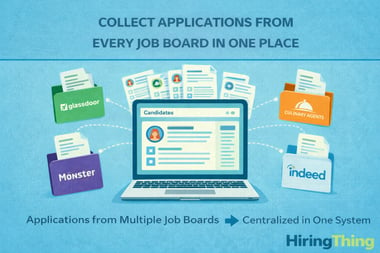
An applicant tracking system solves this challenge by collecting applications from all connected job boards and channels into one centralized platform. When a candidate applies through a job board connected to the ATS, their application is automatically added to the system. The candidate profile contains their resume, contact information, and application details in one organized location.
This centralized structure allows recruiting teams to manage candidate pipelines much more effectively. Recruiters can quickly review applicants, move candidates through different hiring stages, and track communication with each individual. Hiring managers can also access candidate information directly through the system.

Centralizing candidate applications provides several important advantages for organizations managing high volumes of applicants. Instead of searching through emails and attachments, recruiters can review candidate information within a structured interface. This improves both efficiency and collaboration across hiring teams.
Key advantages of centralized candidate collection include:
- Applications from all job boards stored in one platform
- Clear candidate profiles with organized resume and application data
- Shared access for recruiters, hiring managers, and HR teams
- Reduced reliance on email for candidate communication
- Better visibility into candidate pipelines and hiring progress
Centralized candidate management also enables better reporting and analytics. Recruiting leaders can analyze where applicants are coming from and which job boards produce the most qualified candidates. These insights allow organizations to refine their recruiting strategy and invest in the channels that deliver the best results.
For enterprise organizations managing high application volumes, this visibility becomes extremely valuable. It allows recruiting teams to maintain control over complex hiring pipelines while ensuring that every candidate receives proper consideration.
Screen and Evaluate Candidates More Efficiently
 Job boards are highly effective at helping employers attract candidates, but they are
not designed to manage the evaluation process. Once applications begin arriving, recruiting teams must review resumes, assess qualifications, and coordinate feedback across hiring managers. When these tasks are handled manually, the process can become time consuming and difficult to manage.
Recruiters often need to open each resume individually, review qualifications, and organize applicants into folders or spreadsheets. Hiring managers may receive multiple emails containing candidate information and feedback from different team members. As applicant volumes increase, this manual approach becomes increasingly inefficient.
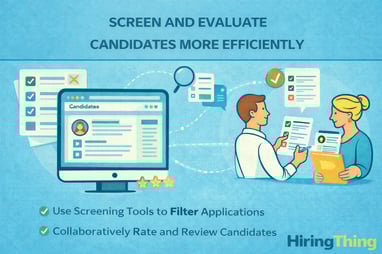
An applicant tracking system helps streamline candidate evaluation by organizing screening and feedback within a structured workflow. Recruiters can add screening questions to applications that help identify whether candidates meet basic qualifications for the role. This allows hiring teams to focus their attention on applicants who are most likely to succeed.
Within the ATS, recruiters and hiring managers can review candidate profiles, rate applicants, and leave comments directly within the system. Each candidate’s progress through the hiring process is recorded in a structured pipeline. This allows teams to see where applicants stand and identify the strongest candidates quickly.
The ability to evaluate candidates within the same platform that distributes job postings creates a more connected hiring process. Recruiters no longer need to move between job boards, email, and spreadsheets to manage applicants. Everything happens within a single system.
An ATS improves candidate screening and evaluation in several ways:
- Screening questions automatically filter unqualified applicants
- Candidate profiles organize resumes and application data
- Recruiters can rate and compare candidates within the system
- Hiring managers can provide feedback directly in the platform
- Interview stages and candidate progress are clearly tracked
These capabilities allow organizations to move strong candidates through the hiring process more quickly. Recruiting teams spend less time managing administrative tasks and more time focusing on strategic hiring decisions.
For organizations managing high volumes of applicants, structured candidate evaluation also improves the overall candidate experience. Candidates receive timely communication and clear updates about their application status. This helps maintain a professional hiring process even when applicant volumes are high.
Building a Scalable Hiring System
 Growing and enterprise organizations need hiring systems that can scale with the business. As teams expand and hiring demands increase, manual recruiting processes become difficult to maintain. Structured tools and workflows become essential for managing candidate pipelines effectively.
Job boards remain valuable because they help employers reach large audiences of job seekers. They generate the applicant traffic that organizations need in order to find qualified candidates. However, attracting applicants is only the first step in the hiring journey.
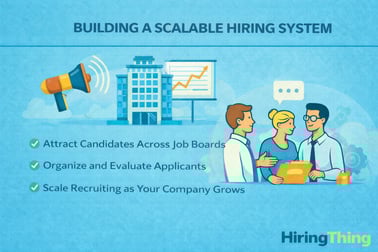
An applicant tracking system connects job boards with internal hiring workflows. By integrating job distribution, candidate management, and evaluation tools into a single platform, the ATS creates a coordinated recruiting system. This structure allows organizations to manage complex hiring operations with greater clarity.
When job boards and applicant tracking systems work together, organizations gain both reach and control. Job boards help attract candidates from a wide talent pool. The ATS ensures those candidates are evaluated and managed efficiently.
Organizations that adopt this integrated approach gain several advantages:
- Greater visibility into recruiting pipelines
- More consistent hiring processes across departments
- Improved collaboration between recruiters and hiring managers
- Better data for evaluating recruiting performance
- A hiring system that can scale with organizational growth
For organizations focused on growth, building a scalable recruiting system is essential. Job boards attract the candidates. The applicant tracking system ensures those candidates are managed effectively.
Together, these tools form the foundation of modern hiring for organizations that need both reach and structure in their recruiting strategy.
Related Resources
- Innovative Strategies to Improve Recruiting and Retention
- Seven Steps to Selecting the Right Job Board
- The HiringThing Guide to Increasing Your Applicant Traffic
- Rethink What You Know About Job Postings
About HiringThing
HiringThing is a modern recruiting and employee onboarding platform as a service that creates seamless talent experiences. Our white label solutions and open API enable technology and service providers to offer hiring and onboarding to their clients. Approachable and adaptable, the HiringThing HR platform empowers anyone, anywhere to build their dream team.