


High employee turnover is draining profitability and stability from industries like construction, healthcare, and retail, and for PEOs, the opportunity to fix it starts somewhere most employers never think to look. Here is why the first days of the employee journey matter more than anything that comes after.
Summary
- Employee loyalty is not dead; it is being undermined by broken hiring and onboarding processes that make new hires feel replaceable before they ever settle in.
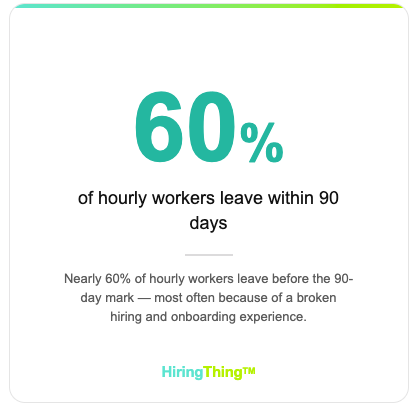
- Nearly 60 percent of hourly workers leave within their first 90 days, and the root cause is almost always a lack of structure and consistency at the start of the employee journey.
- Technology-enabled hiring and onboarding tools give PEOs the ability to help clients build repeatable, reliable early experiences that reduce churn and build genuine workforce stability.
- PEOs that lead on hiring and onboarding strategy stop being administrative vendors and become the strategic workforce partners their clients actually need.
There is a conversation that happens over and over again in HR circles, usually between someone who has been in the people business for a while and someone who has not. It goes something like this: the newer person says that workers today just do not care, that loyalty is a thing of the past, that you hire them and they walk out the door before the ink is dry on the offer letter. The more experienced person in the room usually nods politely and then says something like, "I am not sure that is the whole story."
They are right. It is not the whole story. Not even close.
High turnover in industries like construction, healthcare, and retail is real and it is painful. Nobody is going to argue that point. Employers in those spaces know the feeling of running hard just to stay in the same place. You post the job, you screen the candidates, you bring someone on, and three weeks later you are doing it all over again. It is exhausting and it is expensive. But here is the thing that gets lost in all of that noise: the problem is rarely the workers. The problem is usually the system they are walking into.
PEOs are in a genuinely unique position to fix this. Not by adding more administrative layers, not by sending out another checklist, but by helping their clients understand where loyalty actually begins and what they can do to build it from the very first touchpoint.
The Treadmill Nobody Wants to Be On
Ask anyone running HR at a mid-sized construction company, a regional healthcare group, or a chain of retail stores and they will tell you the same thing. Recruiting feels like a treadmill. Constant motion. Very little progress. Nearly 60 percent of hourly workers leave within their first 90 days, and ghosting has become so common that some employers have started building it into their planning assumptions. People accept offers and just never show up. Others make it a few weeks before they are gone without a word.
When you see this pattern repeat itself month after month, it is tempting to conclude that something has shifted in the workforce. That people today are simply less committed. That the old social contract between employer and employee has dissolved. A lot of employers have landed in that place, and honestly, who could blame them.

But that conclusion misses something important. When nearly every new hire is leaving before they settle in, that is not a coincidence. That is a signal. And the signal is pointing at the start of the employee journey, not the end of it.
First Impressions Are Not Just for Job Interviews
We spend a lot of time talking about how candidates need to make a strong first impression. Dress appropriately, research the company, come prepared with questions. All of that is true. But the employer side of that first impression gets far less attention, and it deserves a lot more.
When someone accepts a job and then shows up on day one to find that nobody seems to know who they are, that their paperwork is a mess, that their manager is too busy to sit down with them, and that nobody has a clear plan for getting them oriented, they draw a conclusion. The conclusion is that they are not important. That the organization does not have its act together. That this is probably not a place where they are going to feel valued or set up to succeed.
And here is the part that stings: they are usually right.
This is not about bad culture or low wages, though both of those things matter. This is about the basic experience of starting a new job. Research consistently shows that employees in every sector want to feel prepared, supported, and respected. They want clarity about what is expected of them. They want to feel like someone thought about their arrival before they walked in the door. When they do not get that, they disengage fast. Many of them leave before the 90-day mark, and the employer ends up assuming the worker was just not committed. In reality, the employer never gave them a reason to be.
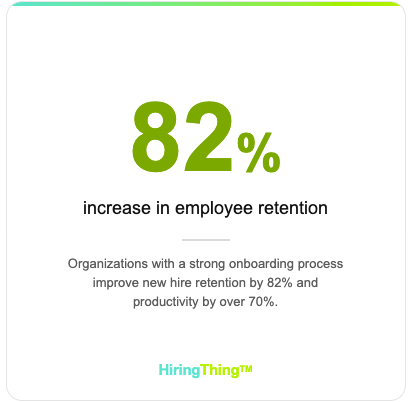
The data backs this up in a way that is hard to argue with. According to HiringThing's employee onboarding statistics, strong onboarding increases overall employee retention by 82 percent. That is not a marginal improvement. That is transformational. And yet 88 percent of companies admit they do not onboard well. Those two numbers sitting next to each other tell you everything you need to know about where the retention opportunity is hiding.
The Process Problem Nobody Wants to Own
Here is an honest observation about how hiring and onboarding tend to get treated in high-churn industries. They are afterthoughts. The focus goes to getting the warm body in the door and then moving on to the next fire. There is no consistent communication with candidates between the offer and the start date. There is no structured plan for the first week. There is no clear outline of what success looks like in the first 30, 60, or 90 days. The process is reactive, rushed, and inconsistent from one manager to the next.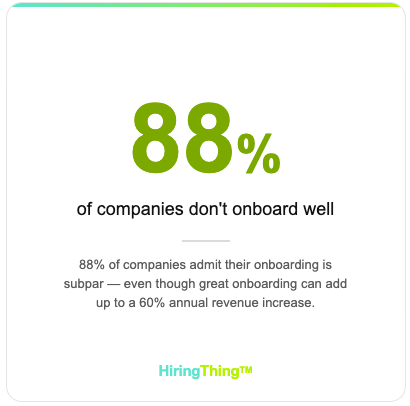
That inconsistency matters more than people think. When a new hire in one department gets a thorough, thoughtful onboarding experience and another new hire in a different department gets handed a stack of forms and told to figure it out, you are sending a message about how the organization values its people. Even if nobody intends to send that message, it lands.
The good news is that fixing this is not about hiring a team of onboarding specialists or launching a six-month culture initiative. It is about building simple, repeatable systems that work the same way every time, for every hire, regardless of which manager is running the show that day. That is the lever. Consistency. Structure. Follow-through.
HiringThing's guide to meaningful employee onboarding makes a point that a lot of organizations miss: onboarding does not begin on the first day of work. It begins during the recruiting process. The job posting itself is the first step. The communication a candidate receives after applying is part of the experience. By the time someone walks in on their first morning, they should already have a clear sense of who the organization is and what they can expect. If they are getting that information for the first time on day one, you are already behind.
What PEOs Can Actually Do About This
Small and mid-sized businesses are not going to build robust hiring and onboarding systems on their own. They do not have the time, the expertise, or frankly the bandwidth to prioritize it when they are trying to run their core operations at the same time. That is the whole reason PEOs exist. The question is whether PEOs are going to use their position to drive real workforce outcomes or whether they are going to keep playing the role of administrative vendor.
This is genuinely one of the best opportunities in the PEO space right now, and it does not require a massive overhaul to capitalize on it. It requires helping clients adopt technology that standardizes the early stages of the employee journey. Tools that automate critical steps so that nothing falls through the cracks. Platforms that give candidates a consistent, professional experience from the moment they apply to the moment they hit their 90-day mark.

The business case for this is not subtle. Replacing an employee can cost anywhere from a third to double their annual salary, depending on the role and the industry. That cost includes lost productivity, recruiting expenses, the time managers spend interviewing and training, and the impact on team morale when turnover is constant. When you put those numbers on the table for a client, and then show them what a structured, technology-enabled hiring and onboarding process can do to reduce that exposure, the conversation changes. You stop being the company that handles their paperwork and you become the partner that is helping them build a more stable, productive workforce.
HiringThing's HR technology resource for PEOs walks through exactly how this can work in practice, including how the right tools fit into the broader HR cycle that PEOs are already managing for their clients.
Solving the Common Challenges That Keep Showing Up
There are a handful of challenges that come up over and over again when PEOs work with clients in high-churn industries. Rushed hiring decisions made under pressure. Candidates disappearing between offer and start date. New hires who never really get oriented before they become disengaged. Managers who are inconsistent in how they bring people on board. None of these are unsolvable problems, but they all share a common root cause: the absence of a reliable process.
Solving common PEO challenges often comes back to this same insight. When organizations have a structured recruiting and onboarding workflow, the outcomes improve across the board. Candidates feel more confident in their decision to join. Managers spend less time scrambling on day one because the administrative groundwork is already done. New hires show up with a clearer sense of what they are walking into. And the employer sends a signal, maybe for the first time, that they were expected and that their arrival mattered.
That signal is not small. It is the foundation of what eventually becomes loyalty. Not the loyalty of someone who stays out of inertia or because they have no other options, but the loyalty of someone who genuinely feels like they landed somewhere worth staying.
The Loyalty Myth That Needs to Go Away
There is a persistent belief in some corners of the employer world that frontline and hourly workers are just different. That they are transactional by nature. That they are not really looking for a career, just a paycheck, and that loyalty is not something you can reasonably expect from them.
This belief is both wrong and convenient. It is convenient because it lets employers off the hook. If the workforce is just inherently disloyal, then there is nothing to fix. The turnover is not a symptom of anything the employer is doing or failing to do. It is just the cost of doing business in that industry.
But it is wrong because the evidence points clearly in the other direction. Employees at every level of an organization respond to the same basic things: feeling respected, feeling prepared, feeling like their employer cares whether they succeed. The difference between a frontline worker who stays for three years and one who leaves after three weeks is often not the person. It is the experience they had from the moment they applied.
When PEOs help their clients build employee onboarding software into their workflow, they are not just streamlining a process. They are changing the experience that new hires have from day one. They are helping their clients become, maybe for the first time, employers worth staying for.
The Strategic Opportunity Is Right Here
PEOs that are still positioning themselves primarily as administrative service providers are leaving something significant on the table. The businesses they serve are desperate for workforce stability. They are spending real money every time an employee walks out the door in the first 90 days. They would genuinely benefit from a partner that could help them fix the underlying problem, not just process the paperwork after the fact.
The path from administrative vendor to strategic workforce partner runs directly through hiring and onboarding. It is not a complicated path. It does not require reinventing what PEOs do. It requires using the position PEOs already occupy to introduce practical, scalable tools that make the early employee experience more consistent and more human.
Understanding what a private label applicant tracking system can do for a PEO is a good place to start if this direction makes sense for your organization. The ability to offer clients a branded, integrated recruiting and onboarding solution puts the PEO at the center of the workforce strategy, not at the end of the administrative line.
The businesses that will win in high-churn industries over the next decade are not going to be the ones that simply get better at replacing workers fast. They are going to be the ones that figure out how to build environments where people actually want to stay. That work starts before the first day. It starts with how candidates are treated during recruiting, how well-structured the onboarding experience is, and whether the new hire feels like they landed somewhere that knew they were coming.
Loyalty is not dead. It never was. It just requires a little more intentionality than most employers have been willing to give it. And PEOs are in the perfect position to help change that.

About HiringThing
HiringThing is a recruiting and HR workflow platform that creates seamless HR experiences. Our white label solutions and open API enable HR technology and service providers to offer talent software to their clients. Approachable and adaptable, the HiringThing HR platform empowers anyone, anywhere to strengthen their team.



.jpg?width=45&name=1621426681866%20(1).jpg)