
The staffing industry has changed more in the last five years than it did in the twenty before that, and the software powering it has had to keep pace. Choosing the right platform is one of the most consequential decisions a staffing agency owner will make, so let's break down how to do it well.
Summary
- The right staffing software creates breathing room for recruiters to focus on relationships instead of repetitive tasks
- Start your evaluation by identifying what is actually broken in your current process before looking at any product
- Candidate experience matters just as much as recruiter experience when choosing a platform
- White label solutions give agencies a competitive edge by offering branded hiring experiences for each client
- Scalability, integration, security, and support quality should carry as much weight as feature lists
Why Software Matters More Than It Used To
There was a time when a staffing agency could get by with a decent Rolodex, a sharp memory, and a phone that never stopped ringing. Those days are gone. The volume of candidates, the complexity of client expectations, and the speed at which positions need to be filled have all increased dramatically.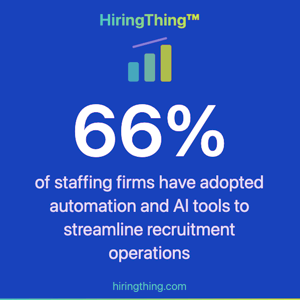
Research into how recruitment strategies are evolving makes it clear that organizations are investing heavily in technology-driven hiring. Social media sourcing, pay transparency, and automated candidate screening are no longer "nice to have" features. They are baseline expectations. And if your agency cannot deliver on those expectations because your tech stack is outdated, your clients will find someone who can.
Good staffing software is not just about keeping up with the competition, though. It is about creating breathing room. When the right platform handles resume parsing, interview scheduling, and candidate communications, your recruiters can spend their time doing what they actually got into this business to do. They can build relationships. They can evaluate fit. They can make the kinds of judgment calls that no algorithm is going to replicate anytime soon.

Start With the Problem, Not the Product
Here is where most agency owners go sideways when shopping for software. They start by looking at features. They pull up comparison charts and start counting checkboxes. That approach is backwards.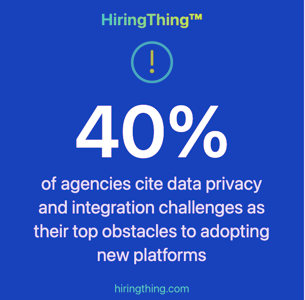
Before you look at a single product demo, sit down with your team and get honest about what is actually broken in your current process.
Ask yourselves questions like these.
- Where are candidates falling through the cracks?
- Where are your recruiters spending time on tasks that add zero value?
- Which clients are the hardest to keep happy, and why?
- Is your onboarding process buried in manual paperwork?
- Are recruiters posting the same job to multiple boards one at a time?
A solid breakdown of common staffing challenges and how technology can address them is worth reading before you even begin your search, because it will help you frame your needs in concrete terms rather than abstract wishes.
Once you know what is broken, you can evaluate software based on how well it solves those specific problems. That is a much more productive conversation than asking "does it have video interviewing?" when nobody on your team has ever used video interviewing.
The Features That Actually Move the Needle
There are certain capabilities that virtually every staffing agency is going to need from its software. Not all of them will be equally important to your shop, but if a platform is missing any of these entirely, that should give you pause.
- Applicant tracking is the backbone. This is the system that organizes candidate information, ranks resumes against job criteria, and gives your team a shared view of where every applicant stands in the pipeline. Without it, everything else falls apart.
- Job distribution should let you push job postings out to multiple boards simultaneously. The days of logging into Indeed, then LinkedIn, then a niche industry board, and manually entering the same information three times are over.
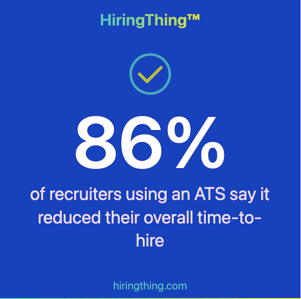
- Resume parsing separates a good platform from a mediocre one. When a candidate submits a resume, the software should extract the relevant data automatically and populate your system without a recruiter having to type anything. This is not about being lazy. It is about accuracy and speed when you are processing hundreds of applications a week.
- Interview coordination has become increasingly complex, especially for agencies managing multiple clients with different hiring managers, time zones, and preferences. A platform that offers real-time calendar access and automated scheduling invitations will save your team a remarkable amount of back-and-forth email.
- Onboarding workflows are where a lot of agencies drop the ball. The recruitment side gets all the attention, but the experience a new hire has between accepting the offer and showing up on day one matters enormously. HiringThing builds onboarding directly into their recruiting and workforce management platform, with document templates, electronic signatures, and task management tools that keep everything organized and professional.
- Analytics and reporting round out the essentials. You need visibility into how your agency is performing. Which job boards generate the best candidates? What is your average time to fill? Which recruiters are closing the most placements? Your software should make it easy to pull these numbers without requiring a data science degree.

Do Not Overlook the Candidate Experience
In the rush to find software that makes life easier for recruiters and agency owners, it is tempting to forget that candidates are also using this system. And their experience matters.
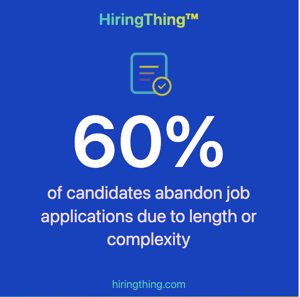 Think about it from the candidate's perspective for a moment. They find a job posting. They click apply. What happens next? If your software forces them through a clunky, confusing application process that looks like it was designed in 2009, a significant number of them are going to bail before they finish. Research consistently shows that overly long or complicated applications cause a huge percentage of candidates to abandon the process entirely.
The best staffing software lets you customize the application experience. Here is what to look for:
- Mobile-friendly design, because the majority of job seekers are searching and applying from their phones
- Clean, branded interfaces so candidates feel like they are interacting with a professional organization
- Express application options that reduce friction for high-volume roles
- Custom career pages that reflect each client's employer brand
This is one area where white label solutions really shine. A white label platform lets you brand the entire hiring experience for each of your clients, which means candidates see the client's logo, colors, and messaging throughout the process. That level of personalization makes a real difference in how candidates perceive both your agency and the employer you are placing them with.
Evaluating Ease of Use
I have seen agencies invest in powerful, feature-rich platforms and then watch their team refuse to use them because the interface was a nightmare. All the capability in the world does not matter if your recruiters dread logging in.
When you are evaluating software, pay close attention to how intuitive the platform feels during the demo. Can a reasonably tech-savvy recruiter figure out how to post a job without reading a manual? Is the navigation logical, or does it feel like the developers organized everything by some internal logic that only makes sense to them?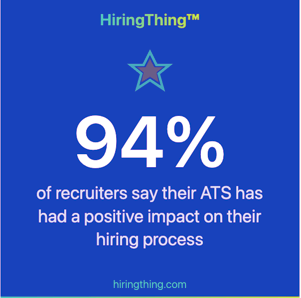
Better yet, do not just watch the sales rep click through the demo. Ask for a trial period and let your actual team members use it. Watch where they get confused. Listen to their feedback. The people who will be living in this software eight hours a day are the ones whose opinions matter most.
Training time is a real cost. If a platform takes three weeks of intensive training before your team is productive, factor that into your evaluation. A simpler tool that your team adopts quickly may deliver more value in the first six months than a complex one that takes a quarter to learn.

Integration Is Not a Bonus Feature
Your staffing software does not exist in a vacuum. It needs to play nicely with the other tools your agency relies on. That means your email system, your calendar, your background check provider, your payroll platform, and whatever else is part of your daily workflow.
Before you commit to any platform, here is what I would do:
- Make a complete list of every tool your agency currently uses
- Ask the vendor specifically about each integration, not just general compatibility
- Request a live demonstration of each integration during your trial period
- Find out whether the platform offers an open API for building custom connections
Some platforms take integration further by offering an open API, which means your development team or a contractor can build custom connections to virtually any other system. HiringThing takes this flexible approach to integrations, giving agencies the ability to connect their systems in ways that make sense for their specific workflow rather than being locked into whatever pre-built options the vendor happens to offer.
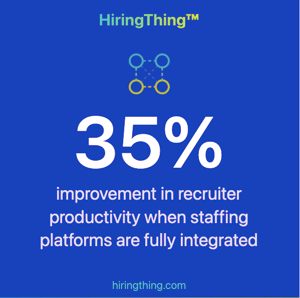
Industry leaders have long emphasized that technology integration is one of the factors that separates thriving agencies from those that struggle to scale. If your tools do not talk to each other, you end up with data silos, duplicate entry, and the kind of inefficiency that makes experienced recruiters want to quit.
Think About Where You Are Going, Not Just Where You Are
This is the mistake I see most often, and it is an understandable one. Agency owners evaluate software based on their current size and needs. They pick something that works perfectly for a five-person shop with twenty active clients. Then the agency grows to fifteen people with sixty clients, and the platform cannot keep up.
Scalability matters. When you are talking to vendors, dig into these specifics:
- How does pricing change as you add users?
- Are there volume limits on job postings, candidate records, or client accounts?
- What happens when you need to onboard a major new client in a hurry?
- Can the platform handle a sudden doubling of your workload?
The staffing industry has a long history of firms growing in bursts. A single large client contract can double your workload overnight. Your software needs to be ready for that moment, not scrambling to catch up.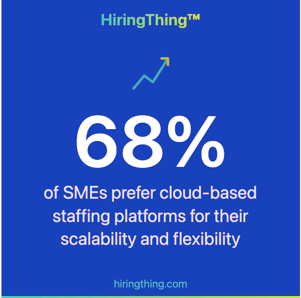
The flip side is also true. If you are a smaller agency, you should not be paying for enterprise-level features you will never use. The best vendors offer flexible pricing models that let you scale your costs alongside your growth. You want to pay for active usage, not theoretical capacity.
Security and Compliance Are Non-Negotiable
Staffing agencies handle an enormous amount of sensitive personal data. Social Security numbers, background check results, employment histories, medical information for certain placements, and financial records all pass through your systems. If that data is not protected, the consequences can be devastating.
When evaluating software, ask direct questions about these areas:
- Data encryption standards, both in transit and at rest
- Role-based access controls and user permissions
- Compliance certifications relevant to your industry
- Data storage locations and jurisdiction
- Breach notification policies and incident response plans
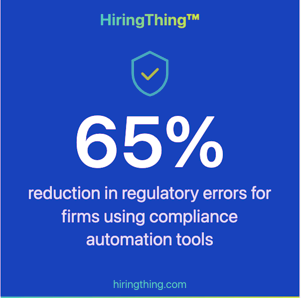 If you are placing candidates in healthcare, finance, or government, there may be industry-specific compliance requirements that your platform needs to support. Do not take the vendor's word for it without verification. Ask for documentation and references from other agencies in regulated industries.
The Value of Exceptional Support
Here is something that does not show up on feature comparison charts but makes all the difference in practice. When something goes wrong, and something will eventually go wrong, how quickly and effectively does the vendor respond?
Some software companies treat customer support as an afterthought. You submit a ticket and wait three days for a canned response. Others treat it as a core part of their product, with dedicated account managers, fast response times, and a genuine interest in helping you succeed.
Here is how to evaluate support quality before you sign anything:
- Ask other agencies about their support experiences with the vendor
- Check independent reviews that specifically mention support interactions
- Submit a few support requests during your trial period and time the responses
- Ask whether you will have a dedicated account manager or just a ticket queue
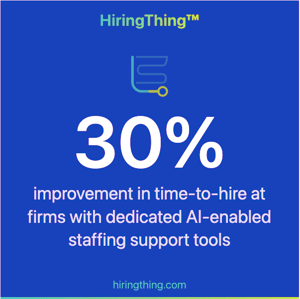
The quality of support you receive before you become a paying customer is usually the best it is ever going to get, so treat it as a meaningful data point in your evaluation. HiringThing has built a reputation for outstanding support and partnership with staffing professionals, which is the kind of thing that only becomes fully apparent once you are in the trenches together.
Consider the White Label Advantage
If your agency recruits on behalf of multiple clients, and most do, a white label solution deserves serious consideration. White label software lets you present a fully branded experience to each client and their candidates, with your client's logo, colors, and career page design front and center.
This matters for several reasons:
- It strengthens the professional image of your agency and builds client trust
- It creates a better candidate experience by making the process feel direct rather than intermediated
- It opens up revenue opportunities because branded recruiting experiences justify premium pricing
- It reduces client churn by making your services feel deeply integrated into their operations
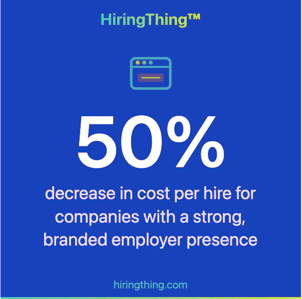 HiringThing's white label platform for staffing agencies allows agencies to manage multiple clients from a single account while customizing the experience for each one. That combination of centralized management and client-specific branding hits a sweet spot that a lot of agencies are looking for.
Agencies that position their technology as a value-add tend to retain clients longer and reduce churn, which is one of the biggest ongoing challenges in the staffing business. When a client sees their brand reflected throughout the hiring process and gets real-time visibility into recruitment progress, switching to a competitor becomes a much harder decision for them.
Take Your Time, But Not Too Much Time
There is a balance to strike here. You do not want to rush into a decision and end up locked into a platform that does not fit. But you also do not want to spend six months in analysis paralysis while your competitors are out there placing candidates faster because they have better tools.
My suggestion is to follow a timeline like this:
- Weeks one and two Narrow your list to three or four serious contenders based on your specific needs
- Weeks three through six Test each platform using real scenarios from your own business
- Throughout the process Involve your team, talk to references, and read what industry organizations have to say about technology adoption
When you are testing platforms, use real scenarios. Post an actual job. Run an actual candidate through the pipeline. Invite a client to look at the branded experience and give you their honest reaction. That is the kind of hands-on evaluation that reveals whether a platform truly fits your operation.
A Few Final Thoughts
The staffing industry is not slowing down. The demand for flexible workforce solutions continues to grow, and agencies that invest in the right technology will be the ones best positioned to capture that growth. But "right" does not mean "most expensive" or "most features." It means the platform that solves your specific problems, fits your team's working style, and can grow alongside your business.
Do not get distracted by bells and whistles. Stay focused on what matters. Talk to your team. Talk to your clients. And remember that the goal is not to have the fanciest software on the market. The goal is to place great candidates with great companies, faster and more effectively than you could without it.
About HiringThing
HiringThing is a modern recruiting and employee onboarding platform as a service that creates seamless talent experiences. Our white label solutions and open API enable HR technology and service providers to offer hiring and onboarding to their clients. Approachable and adaptable, the HR platform empowers anyone, anywhere to build their dream team.


.jpg?width=45&name=1621426681866%20(1).jpg)